Candidate Sourcing Cornerstone
This crash course will help you quickly understand why sourcing is the most important recruitment skill for early stage founders, how to stand up a candidate pipeline, and how to create the right foundation to scale a team.
What is Sourcing?
Sourcing is the process of identifying, engaging, and getting qualified candidates into the interview process who would not have applied on their own.
Sourcing activities include:
- Searching for qualified talent through databases such as LinkedIn, online communities, social media profiles, competing companies, and more.
- Identifying prospective candidates who fit a target profile (which requires an in-depth understanding of core competencies and skills, as well as a grasp of the industry landscape and market supply of talent).
- Creating interest around either open positions or the organization as a whole through various forms of outreach and outreach campaigns to engage prospective candidates.
Why should early stage founders prioritize sourcing?
- Sourcing improves the quality of your hires. Sourced, or passive, candidates are more likely than active talent to want to make an impact on your business. These candidates tend to be more experienced than those who apply to open positions – in fact, they are 17% less likely to need skill development. Candidates you reach out to tend to be more transparent about what they are looking for, which makes it easier to assess fit. Candidates who are not actively searching for a position also tend to choose your company because it’s the right next career move for them, not because they need employment.
- Sourcing is the most efficient way to create a strong candidate pipeline.Building and maintaining a pipeline of diverse, experienced candidates reduces time and cost to hire in the long run. It also makes it more likely you’ll spend time only on prospective hires that fit your target profile. Sourcing candidates into your pipeline as a constant motion (vs. hiring proactively on an as-needed basis) also lets you develop a strong employer brand, keeping you top of mind between hires and potentially generating word of mouth.
- Sourcing is the type of hiring most aligned with early stage priorities.Early stage founders face distinct challenges and objectives compared to their hiring counterparts at more established entities. You aren’t just hiring people to work at your company, you’re hiring the people who will help you build your company. And you’re usually doing it within very tight resource constraints. Success hinges on recruiting entrepreneurial individuals with specialized expertise, capable of swift, independent execution at a relentless pace.Other sources of candidates simply aren’t ideal for this early-stage reality:
Inbound applicants are time-consuming to filter and vet, and create a less targeted pipeline of less skilled prospects
Meetups and industry events work well for name brands, but early startups typically lack the brand recognition to stand out and these can also be a big drain on founder time
Campus recruiting connects you to junior candidates who may not be ready to hit the ground running, with limited time to onboard them and make them successful
Hiring marketplaces are expensive and competitive, with quality candidates typically looking for more stability and cash compensation.
Early Sourcing Wisdom
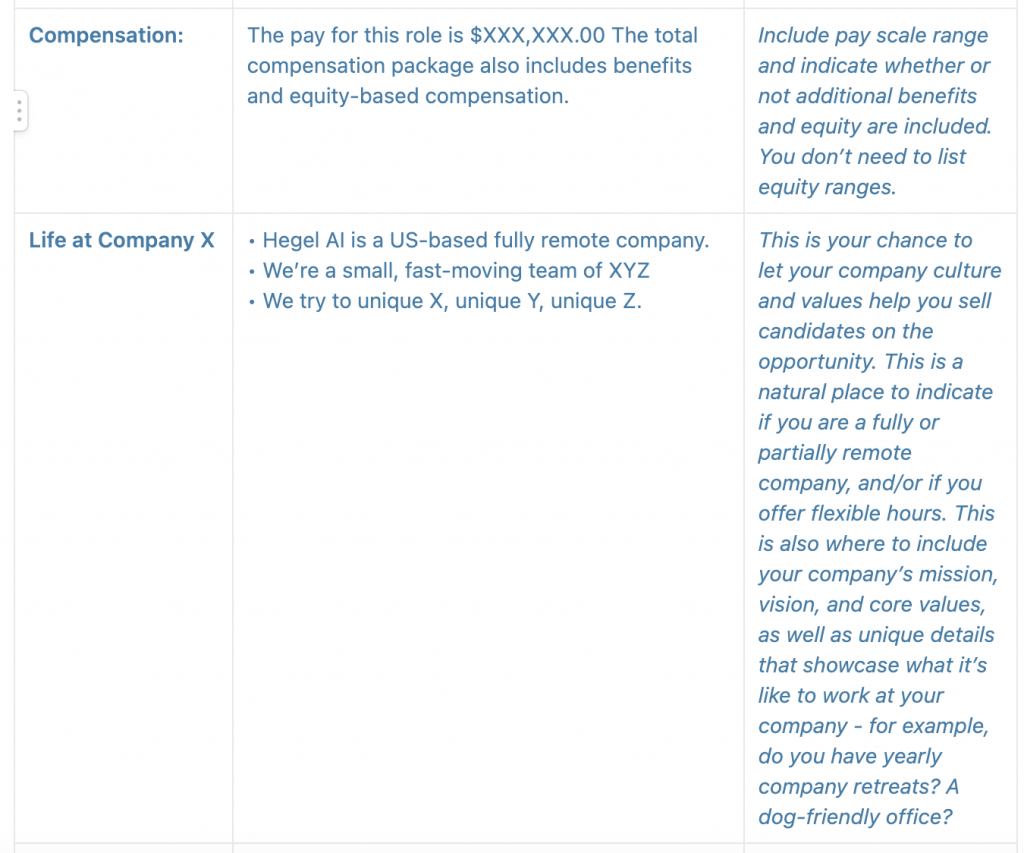
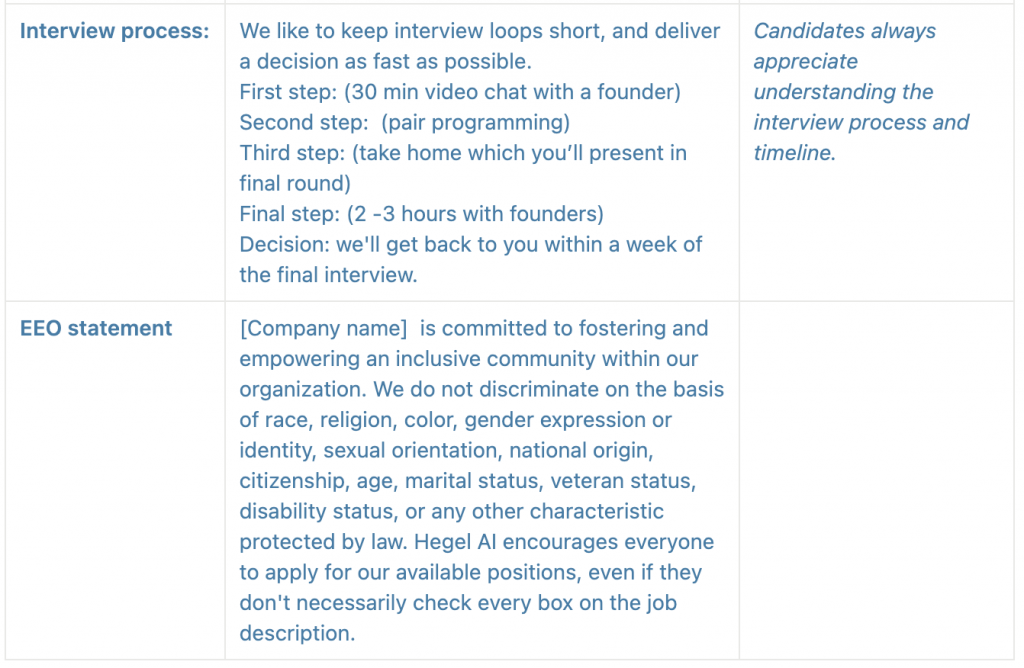
Start with workforce planning. Developing a great job description is an important step, but it shouldn’t be your first one. Take a moment to understand what roles you need to open now and in the near future, and why. Consider the key skills and core competencies you’re looking for in each role. Think about the ideal interview process and compensation range for each role. Finally, consider what type of workplace culture you’d like your company to have. After you’ve considered all of these factors, you’ll be ready to write a great job description. More on that below.Identify target companies that are relevant to your company for each open role. Look beyond just direct competitors to any company with an important point of commonality: For example, product-led growth companies, SaaS companies, developer tools companies, or companies working on different problems in the same sector. Consider the culture at each company and figure out if it’s aligned with what you’d like to build. Tailor each list for the specific open role – companies with exceptional marketing teams may not necessarily have exceptional engineers.Use LinkedIn Recruiter Lite and your role-specific target lists to surface specific candidates at those companies. Be sure to screen for candidates that worked at a startup at some point – even if they’re with a public company now.
Job Description Template