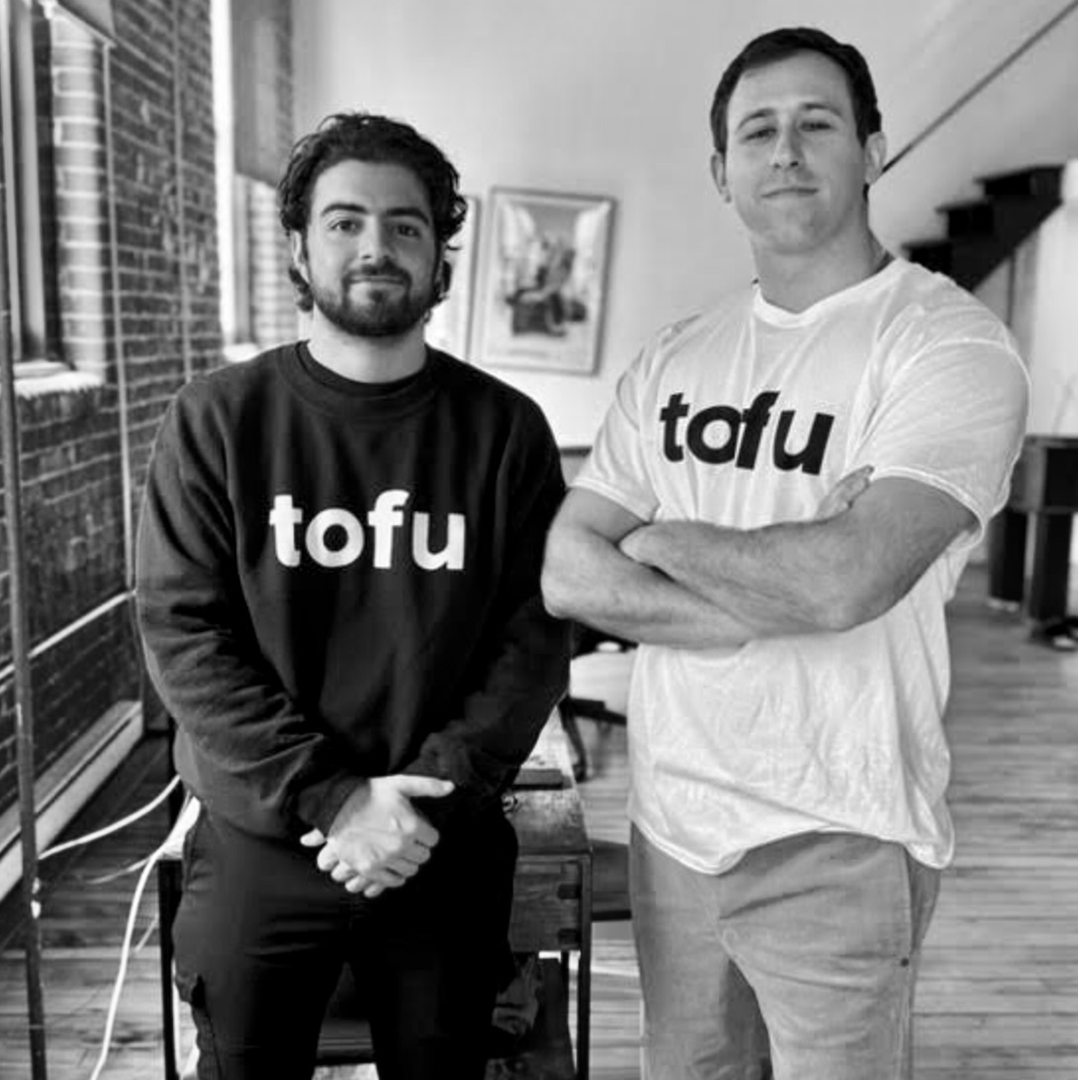

The Person You’re Interviewing Might Not Be Real
When we first invested in Tofu, this wasn’t the company we thought we were investing in. The original idea was a marketplace for pre-vetted talent. Companies spend enormous amounts of time sourcing and interviewing candidates, only to hire one person. If you interviewed ten great people and hired one, Tofu wanted to put the other nine back into a shared pool where another company could discover them. We liked the idea enough that we tried to get Ritual portfolio companies using it, and other venture firms were experimenting with similar networks across their portfolios. But it never really took hold.
The problem was trust. If another company told you a candidate was great, how much did you really know about that person? How thoroughly had they been vetted? Was their experience legitimate? Could you trust the underlying data? Jason Zoltak kept digging into that problem and discovered something much bigger. Companies weren’t just having trouble trusting each other’s candidates. Increasingly, they couldn’t trust their own applicants.
AI has fundamentally changed the economics of applicant fraud. A bad actor can generate a convincing resume in seconds, tailor it perfectly to a job description and manufacture pieces of an online identity to support it. Remote interviews have created another attack surface, allowing someone to obscure their location, have another person take an interview or increasingly use synthetic audio and video to impersonate someone else. Meanwhile, the recruiting systems companies have spent decades building weren’t designed for any of this. Most assume the person submitting the resume is basically who they say they are, while identity verification and background checks generally happen near the end of the process, after recruiters and hiring managers may already have spent hours with a candidate who never should have made it through the front door.
Jason started building tools to catch those applicants much earlier, and customers started buying them. Tofu quickly went from essentially zero revenue from the fraud product to roughly $1 million in ARR in about six months. Today, the company is building the fraud detection layer for modern hiring, analyzing candidates from the moment they enter the funnel and looking across resumes, identity information, devices, IP addresses and other signals for evidence that someone may not be who they claim to be. As candidates move through the process, Tofu can continue evaluating them for other forms of fraud, including proxy interviews and manipulated audio and video.
The product has already screened hundreds of thousands of applicants and identified a remarkable number of suspicious candidates. More importantly, it is being used by sophisticated technology companies that are experiencing this problem firsthand. What started as a tool sold directly to employers is also becoming infrastructure for the hiring ecosystem itself. Recruiting and hiring platforms can embed Tofu’s fraud detection into their own products rather than building the underlying identity, data and detection systems themselves.
That second part could ultimately be the more interesting business. Every hiring platform is confronting some version of the same problem as its customers ask a question that barely needed to be asked a few years ago: Is this applicant actually real? Building the technology to answer that question requires more than checking an ID. Fraud tactics constantly change, which means the system needs to evaluate a growing collection of signals and learn from what happens across a much larger network. Tofu can become the underlying intelligence layer that allows many different recruiting products to answer that question without each rebuilding the same infrastructure.
The data advantage compounds as the network grows. Tofu begins evaluating candidates at the earliest point in the hiring funnel and continues collecting signals as they move through the process. Employers then provide an especially valuable piece of information: whether the candidate ultimately proved legitimate or fraudulent. More applicants create more signals, more customers create more confirmed outcomes, and those outcomes can improve the models. Because the same bad actors can target multiple companies, intelligence discovered in one part of the network can potentially make the rest of it stronger.
The timing is particularly interesting because two opposing forces are developing at once. AI is making it dramatically easier to manufacture applicants and identities at scale, while companies are simultaneously using AI to automate more of recruiting. One side is generating applications faster than humans ever could, while the other is increasingly relying on software to decide which applicants deserve attention. Somewhere between those two systems, companies need an independent trust layer capable of determining whether the human supposedly behind an application actually exists and is who they claim to be.
That evolution also says something about why we backed Jason in the first place. Early-stage companies rarely end up looking exactly like the pitch deck you originally invested in, and the best founders know the difference between persistence and stubbornness. Jason is a hustler in the best sense of the word. He works incredibly hard, follows through, stays close to customers and keeps moving. When the original marketplace wasn’t getting enough pull, he didn’t spend years trying to force it into existence. He paid attention to what customers were telling him, found a much more urgent problem hiding inside the original one and built into it.
That traction helped Tofu turn the pre-seed round we participated in alongside Garage Capital, Night Capital and Wayfinder into a seed round led by Slow Ventures and Founder Collective. But the financing is less interesting than what has happened to the market around the company. Every improvement in generative AI makes it cheaper to create a more convincing applicant. Every improvement in deepfake technology makes remote verification more difficult. And every AI agent capable of submitting applications increases the volume employers and recruiting platforms have to process. The same technology creating the problem will increasingly be required to defend against it.
We originally invested in Tofu because we liked Jason and his vision for making recruiting more efficient. What he is building today is potentially much larger: infrastructure that helps companies determine whether the people asking to join their organizations are actually who they claim to be. As AI makes identity easier to manufacture, trust is becoming infrastructure. Tofu is building that infrastructure for hiring.