
The Network Behind Biological Intelligence: The Anthrogen Story
We’ve taught machines to write, draw, and code. Anthrogen is teaching them to design life.
The San Francisco–based team is building the network behind biological intelligence, a new computational and experimental stack for designing and validating proteins, the molecular machines that drive every function of life.
Their latest release, Odyssey, is a breakthrough. At 102 billion parameters, it’s the largest and most capable protein model ever built. But scale alone isn’t the story. Odyssey introduces a new architecture — Consensus — that replaces self-attention with a system that mirrors how proteins actually behave: local cooperation first, global coordination second. That means it can reason across 3D structure, function, and sequence in ways that older architectures can’t.
Why does that matter? Because most of biology’s biggest problems like drug design, enzyme engineering, synthetic materials depend on understanding how shape and function connect. Odyssey can learn that relationship directly, designing proteins that meet multiple objectives simultaneously: bind tightly, fold stably, express efficiently. It doesn’t just guess; it optimizes.
This unlocks something that’s never really existed before: programmable biology. Scientists can now specify intent like “I need a protein that does X, but stays stable at 70°C and is easy to manufacture,” and Odyssey can generate candidates that fit that brief.
What makes Anthrogen different is the loop. The company runs massive parallelized wet-lab experiments to test and refine what the model predicts, grounding AI in real-world data. That integration solves the “verification gap” that slows most scientific progress, the disconnect between the speed of computation and the friction of experimental validation.
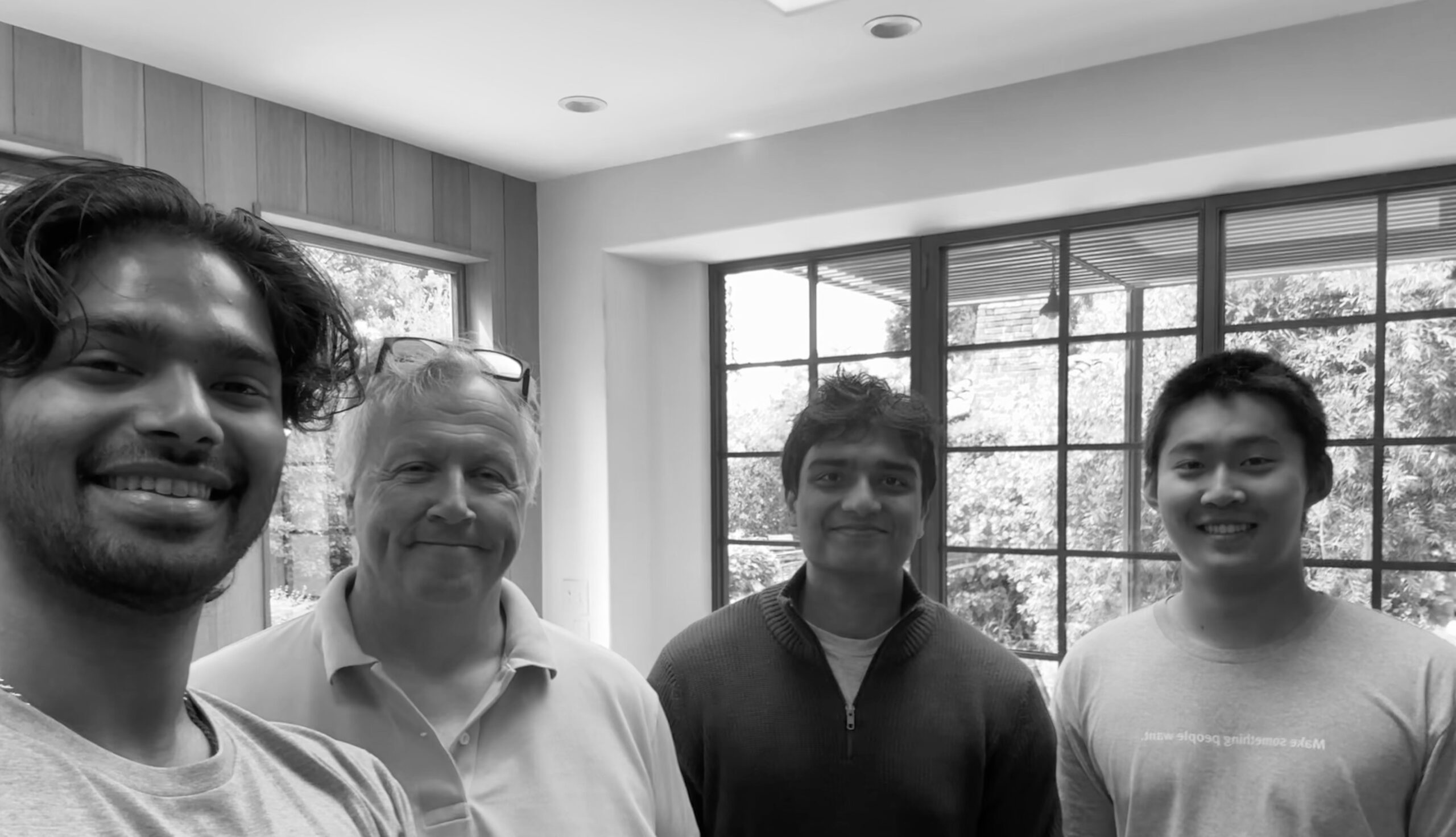
Led by Ankit Singhal and Connor Lee, Anthrogen’s team of scientists, mathematicians, and engineers has built a system that moves biology into the intelligence era. They’re not chasing single discoveries, they’re building the infrastructure to make discovery itself predictable.
Anthrogen isn’t another AI-for-bio company. It’s an attempt to build the reasoning layer for life, a platform that turns the messy complexity of biology into something that can be designed, tested, and improved like software.
That’s the kind of future worth backing.