Sep 13, 2026
Kepler’s Seven-Year Bet on the Future of Compute
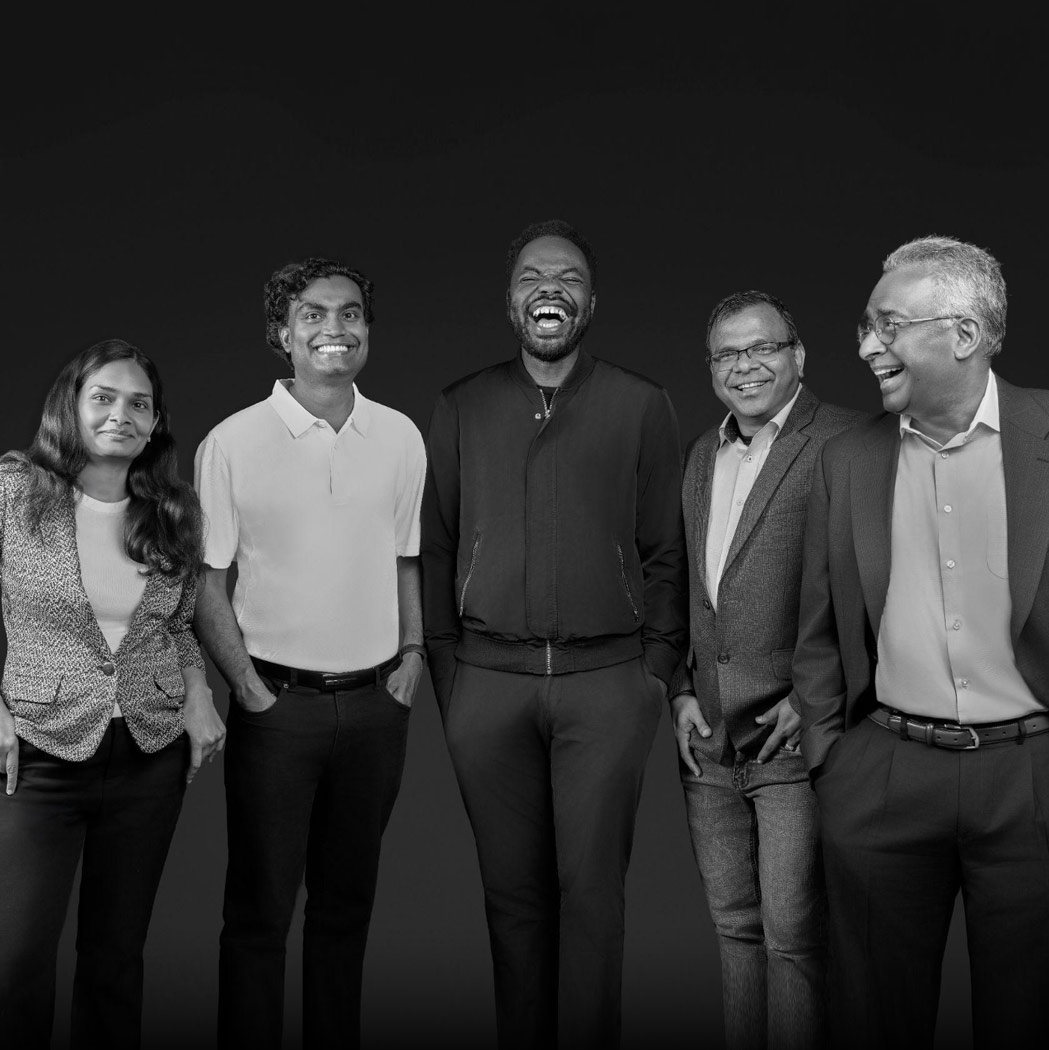
In late 2018, Debo Olaosebikan and Sasikanth Manipatruni showed me one of the most ambitious seed-stage pitches I had seen. The deck was called “Building the Next Generation of Compute,” and it opened with a short history of the transistor. First came the bipolar junction transistor. Then came the MOSFET, the device that powered the modern semiconductor industry. The next space was left blank, with a question underneath it: What’s next for compute?
Co-founders Debo and Sasi, believed the semiconductor industry was approaching the limits of what conventional silicon scaling could deliver. The next meaningful advance would require a change in materials, physics and architecture. Their research pointed them toward ferroelectric materials, which they believed could switch using substantially less energy than conventional CMOS. Combined with a new chip architecture, the technology held the potential for gains measured in multiples rather than incremental percentages. The ambition was to build the next transistor and create a path beyond the limits of Moore’s Law.
The most interesting part of the pitch was the role memory played in their thinking. Kepler believed computing would increasingly be limited by the time and energy required to move data between memory and processors. The company planned to begin with a new memory technology, use that advantage to build an AI processor, and eventually expand into more general-purpose computing.
This was before ChatGPT, before high-bandwidth memory became one of the most contested components in technology, and before power availability began influencing where AI data centers could be built. Yet the presentation had already identified data movement as a central constraint, arguing that reducing the energy of that data movement could yield significant efficiency gains.
Fuel Capital led Kepler’s seed round in 2019. I did not have the technical background to independently verify every element of ferroelectric physics, but I could evaluate the structure of the opportunity, the quality of the people involved and whether the founders had developed a coherent view of where computing was headed.
The problem was fundamental, and Kepler had a credible entry point. If silicon could no longer provide the performance and energy improvements the industry required, new materials and architectures would eventually be needed. Kepler would begin with memory, where higher capacity, bandwidth, lower cost and energy consumption and the upside of non-volatility could support a commercially useful product before the longer term task of building general-purpose logic. AI created a natural opening: unlike general-purpose computing, its deployment was going to be clearly very heavily constrained by memory bandwidth per watt and capacity and it was developing rapidly, with a high enough amount of competition that customers were already willing to adopt new products and specialized hardware when the performance gains justified it.
The team made the scale of the undertaking more believable. Sasi had led beyond-CMOS research at Intel, including serving as the founding research director of the company’s FEINMAN center. Debo had worked in condensed matter physics, spintronics and silicon photonics before building Gigster. Co-founders Rajeev, Ramesh and Amrita had pioneered industry firsts in 3D silicon, ferroelectrics science and AI/ML for science. The broader group brought experience in materials science, 3D, fabrication, large volume memory and logic production, chip design, supercomputing, AI and software. Its advisers included Bob Colwell - the Chief Architect of the Pentium Pro, an ex Intel Fellow who led pioneering efforts in ferroelectric and leading researchers in computer architecture and deep-learning systems.
There were still enormous unknowns between promising science and a commercial product. Kepler had to prove the materials through fabrication, integrate them into a reliable process, build an architecture that could capture the performance gains, and turn all of that into something customers could use. Seven years later, the team has worked through many of those early technical risks and is moving the technology toward production. That is what makes this launch so meaningful. Very few companies emerge from stealth with this combination of technical depth, industry partnerships, intellectual property, manufacturing capability, capital and government support.
Over that same period, the market moved toward the problem Kepler had described. The first phase of the generative AI boom was dominated by models, then GPUs and the enormous data centers required to train and operate them. As those systems grew, memory bandwidth, data movement, power consumption and cooling became increasingly important constraints. Scaling AI now requires progress across processors, memory, networking, power and fabrication at the same time.
In July, the Department of Commerce announced that it had signed a letter of intent to provide Kepler with up to $245 million in CHIPS Act research and development incentives. The proposed funding would support the development in the United States of what Commerce described as “a new class of high-performance AI memory technology” enabled by Kepler’s 3D and ferroelectric technologies. It was the second-largest proposed commitment among the seven companies included in the $874 million initiative, behind only GlobalFoundries.
I believe the significance extends beyond the funding. Semiconductor technology is now inseparable from questions of national competitiveness and supply-chain security. AI leadership depends on access to memory, advanced manufacturing, energy and the specialized equipment required to produce chips at scale. Kepler began as a bet on materials and architecture, but its work now intersects with the broader question of how the United States and its allies build and control the infrastructure underlying AI.
The most interesting early opportunities are often difficult to categorize. The market may be immature, the technology may carry substantial risk, but the real question is have the founders identified something important before consensus forms around it, and do they have the insight and endurance to keep building while the rest of the market catches up.
We invested because Debo, Sasi and the founding team had a credible theory about where computing would eventually run into trouble and a plan for building through those constraints. Seven years later, Kepler is finally ready to share more of that work with the world. Congratulations to Debo, Sasi and the entire team on everything you’ve built so far. We can’t wait to see what comes next.